
Best Way to Break in Pool: Essential Tips & Tricks
The break shot is considered perhaps one of the most important points within a game of pool. It immediately dictates table control, often determining the flow and winner of the game. It may be what potentially pockets one of your balls or the opponent's and positions the cue ball.
A strong break shot can set the tone for the entire rack, immediately establishing table control and scattering the balls for better shot opportunities throughout the game. It determines whether you start in a position of authority or immediately on the defensive.
There are certainly some common misconceptions regarding power and control during pool breaks. Typically, many would assume the maximum physical force will equate to a better spread of the balls. In reality, breaking requires a delicate balance of speed and accuracy. Simply hitting the rack with excessive force can often result in a loss of control.
Focusing instead on a relaxed, accelerating and smooth stroke is better than just hitting it as hard as you can.
In this guide, we'll look at the best ways in which to break in pool, providing essential tips and tricks for both beginners and intermediate players.
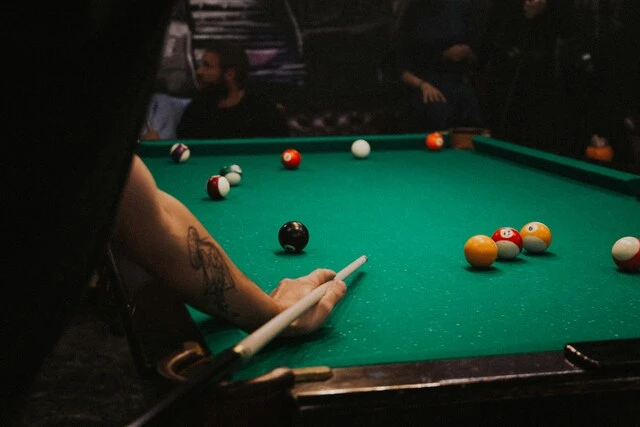
1. Mastering the Perfect Pool Break
So how do you master the perfect pool break? Whether you're a beginner or regular player, understanding the goal of the break shot as well as the importance of consistency over raw power helps to master it regardless of skill.
Understanding the goal of the break shot
The goal of a break shot in pool is to initiate the game. It breaks up the clustered balls, maintaining control of the cue ball to avoid leaving it in a poor position. It is also a good way of maximising the likelihood of potting one or more balls to continue shooting.
A powerful break is useless if the cue ball scratches or ends up in a difficult position. Ideally, you want the cue ball to be near the center of the table. Avoid excessive power and avoid side spins as these can make the cue ball unpredictable in its success at hitting the rack successfully.
While spreading the balls is paramount, it's also helpful if you can pocket a ball on the break. Think about placing the cue ball near the side rail and aiming for the second ball as this can help to push the head ball into the side pocket. High speed and accurate strikes help to ensure maximum energy is transferred to the rack.
Rules and break requirements across pool games
There are numerous rules and break requirements when it comes to pool games. Let's take a look at the key differences in breaks.
- 8-ball: Set up with the 8-ball in the center. The goal is to scatter the balls to create opportunities for either solids or stripes. A powerful hit is the best strategy, aiming for the second row ball to send it into a side pocket.
- 9-ball: A diamond rack with 9 balls and the 9-ball in the center. The goal is to pocket the 1-ball or balls on the side of the diamond, controlling the cue ball. The 1-ball must be struck first, placing the cue ball on the side to increase the chance of pocketing balls.
- 10-ball: Triangle rack with 10 balls and the 10-ball in the center. Similar to the 9-ball with a focus on pocketing the 1-ball. It's a called-shot game requiring more precision.
Legal break requirements in pool are often overlooked and so illegal breaks will often occur. Common requirements include making sure to drive a minimum number of balls to the rails, maintaining proper cue ball placement and hitting specific balls first.
The importance of consistency over raw power
Consistency is a lot more important when breaking in pool, over raw power. Professional players will prioritise consistent breaks as the break shot dictates the immediate flow of the game and control of the table.
By being consistent, it builds muscle memory, reduces errors and improves cue ball control.
Finding your ideal break style
Controlled breaks will focus on accuracy, center-ball contact and cue ball positioning. Adjusting your pool break based on table conditions, opponent skill and rack tightness is essential for turning that break into an offensive advantage.
Table conditions will require a different approach from fast/slick cloths to sticky/slow cloths. From tightening the rack to clingy/dirty balls, it's good to know what you're playing with.
Adjusting your break style is also based on your skill level. For beginners, focus on accuracy over power. For intermediate players, utilising the second ball break is more important. For higher-level opponents, breaking softer to keep the table messy will help with any advantage you want to have.
2. Essential Pool Break Techniques
It's worthwhile knowing some of the essential pool break techniques to help ensure you are doing everything you can to make a successful break.
Proper stance and body positioning
A proper pool break requires a stable and athletic foundation. The key is to generate momentum from your legs and torso, while keeping the cue stroke straight. Keeping your body stable through the shot is also essential for a controlled shot.
Grip and bridge fundamentals
Grip is important and so it's useful to hold the cue firmly but not too tight, to avoid tension. Too tight or too loose and you risk losing control of the cue stick.
Using a closed bridge provides maximum stability, creating a secure loop with the index finger and thumb to prevent the cue from jumping.
An open bridge for a pool break provides superior aim and better cue control, as well as accuracy.
Cue ball placement behind the head string
The cue ball placement is something to think about. Center table breaking offers maximum power and consistency resulting in a more even spread. Side-positioning breaking provides better control over the cue ball's position after the break. Cue ball position is a crucial factor in controlling ball spread during a pool break.
Where to strike the cue ball
When striking the cue ball, there are a number of placements that work effectively. Recommended for beginners: hit the center ball. It ensures full power hits the rack and maximizes ball spread.
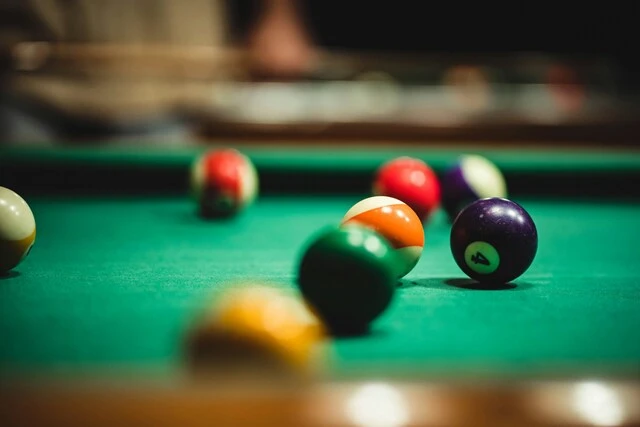
A controlled top spin is good for ensuring the cue ball moves forward into the pack, rather than being pushed back. Excessive top spin though can cause the ball to jump if the cue isn't kept level.
Avoid any side spins and avoid extreme low/high aims. Keeping the cue stick as level as possible helps to prevent the cue ball from jumping off the table, which is a major cause of losing control and scratching.
Following through smoothly
Follow through matters more than swing speed. It ensures maximum energy transfer, consistency and accuracy. Just relying on high speed alone often leads to off-center hits.
Staying down after a pool break is effective in maintaining accuracy and consistency. Lifting your head or body too early may cause the cue tip to rise and lead to misdirected shots.
3. Tips for a Powerful Break Shot
If you're looking to get that powerful break shot, here are some helpful tips that can help achieve it more times than not.
Generating power the right way
Generating the right amount of power is essential. Make sure to use your legs and core instead of just your arm. Timing and acceleration is more effective over brute force too.
Increasing accuracy without losing power
Aligning your dominant eye helps to increase accuracy without losing power. A pre-shot routine helps for consistent breaks too.
Equipment considerations
Consider the equipment you use too. Break cues are designed for maximum power and impact during the opening shot. In contrast, playing cues are built for precision with flexible shafts for spin and lighter weights.
Practising your break effectively
It's good to practice your break effectively through the use of drills. This can help greatly with speed control. Tracking your results is also a great way to figure out what works best for you and your gameplay.
4. Common Pool Breaking Mistakes
There are a number of common pool breaking mistakes worth knowing when breaking in pool. Avoiding these mistakes will help you get the most out of your pool break.
Hitting too hard without control
Hitting the ball too hard can lead to scratches and dry breaks, so it's better to be forceful but controlled.
Signs that you're overpowering your break include:
- Frequent inaccuracy
- Lack of control
- Physical and technical errors
- Poor results
Poor cue ball control
Poor cue ball control can cause poor breaks. Common scratch scenarios on the break include rebounding into corner pockets, overpowering/side-spins and hitting the wrong ball or no ball at all.
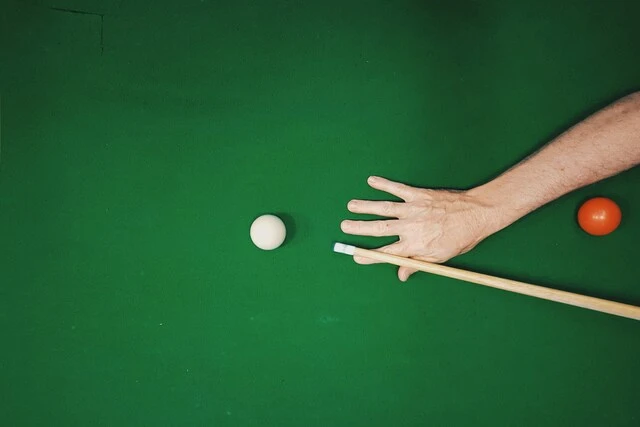
Adjusting your pool break is essential to prevent immediately losing position. Focus on the cue ball's movement after it hits the rack, ideally making it stop.
Inconsistent setup and routine
Changing stance or speed during each break is inconsistent in the routine and can therefore cause a number of poor breaks to occur. Routines are essential to help improve confidence and improve the accuracy and success of each break made.
Ignoring table and rack conditions
As mentioned above, loose racks and the table condition can also influence a proper break. So it's good to adjust your break for different tables.
Work on Getting the Perfect Break Every Time
Mastering the break is an essential way to win more games. It puts you at a good advantage if you hit the cue ball successfully.
Remember that a focus on technique first is better than prioritising power. These small adjustments can lead to major improvements. Be sure to practice and track your progress over time. You can also sharpen your skills by playing online at 247 Pool.
Seasonal Pool Games


More Games



Pool News
Disclaimer
DISCLAIMER: The games on this website are using PLAY (fake) money. No payouts will be awarded, there are no "winnings", as all games represented by 247 Games LLC are free to play. Play strictly for fun.