
8 Ball First Hit: Is It a Scratch in Pool Rules?
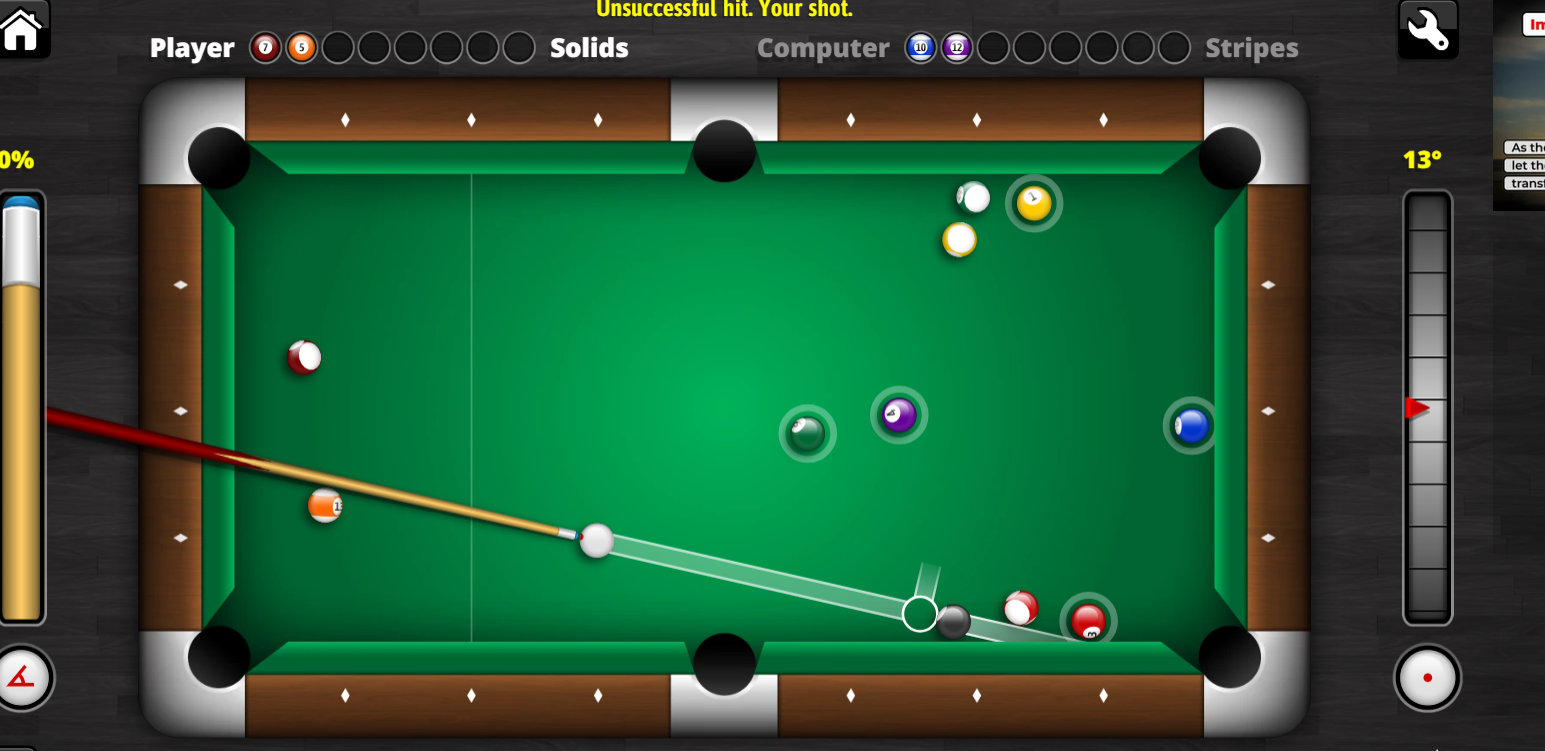
Before breaking off in a game of pool, it's imperative that you understand the rules of whichever variant you're playing. While the basic concept of potting your balls before the opponent clears theirs remains a constant across both 8 ball and 9 ball, there are several differences in the way the game is played. Not least when it comes to the Scratch rulings.
One of the big questions revolves around the role of the 8 ball itself. In this guide, you will learn definitively what the rules are surrounding the 8 ball as well as Scratches in general.
What is a Scratch in Pool Billiards?
In pool, the term Scratch is used to describe any foul involving the cue ball and can be applied to both 8 ball and 9 ball variants. While different organizations may use slightly contrasting rules, most opt for the common rulings.
Before looking specifically at the 8 ball hit rule, it's important to consider the other types of Scratch seen in 8 ball pool. Here are the most common. While some of the fouls are limited to the physical world and cannot be committed during a game of digital pool, they are worth knowing:
- The cue ball is potted. Whether it is potted before or after contact with another ball doesn't matter, a Scratch is called.
- You play a shot in which the cue ball strikes an opponent's ball before one of yours. So, if you're playing Stripes, it is a Scratch if the cue ball strikes a Solid first.
- The cue ball fails to hit any other ball on the table. So if you miss the ball you're aiming for and the cue ball comes to a stop, it is a Scratch foul.
- You accidentally touch the cue ball with your hand during your turn. It is also a foul if you touch any of the other balls with your hand.
- The cue ball is hit twice due to following through with the cue. This is a double shot, resulting in Scratch.
- No ball is potted or makes contact with one of the rails. It doesn't have to be the cue ball that makes contact, but at least one ball should hit the rail.
- The cue ball leaves the table by jumping over the rails. This usually happens after powerful contact with another ball.
All Scratch examples see your turn end and give your opponent an advantage when they play their next shot. Therefore, avoiding them is a key part of the game. In fact, it is often better to play safe and give your opponent a harder shot than take a risk and potentially hand your opponent the initiative.
Other fouls not including the cue ball could be made too. Meanwhile, potting an opponent's ball without potting your own is also a foul. Obviously, many of the Scratch examples - like hitting an opponent's ball first - are not relevant on the break or until Solids and Stripes have been designated.
Rules for Hitting the 8 Ball First
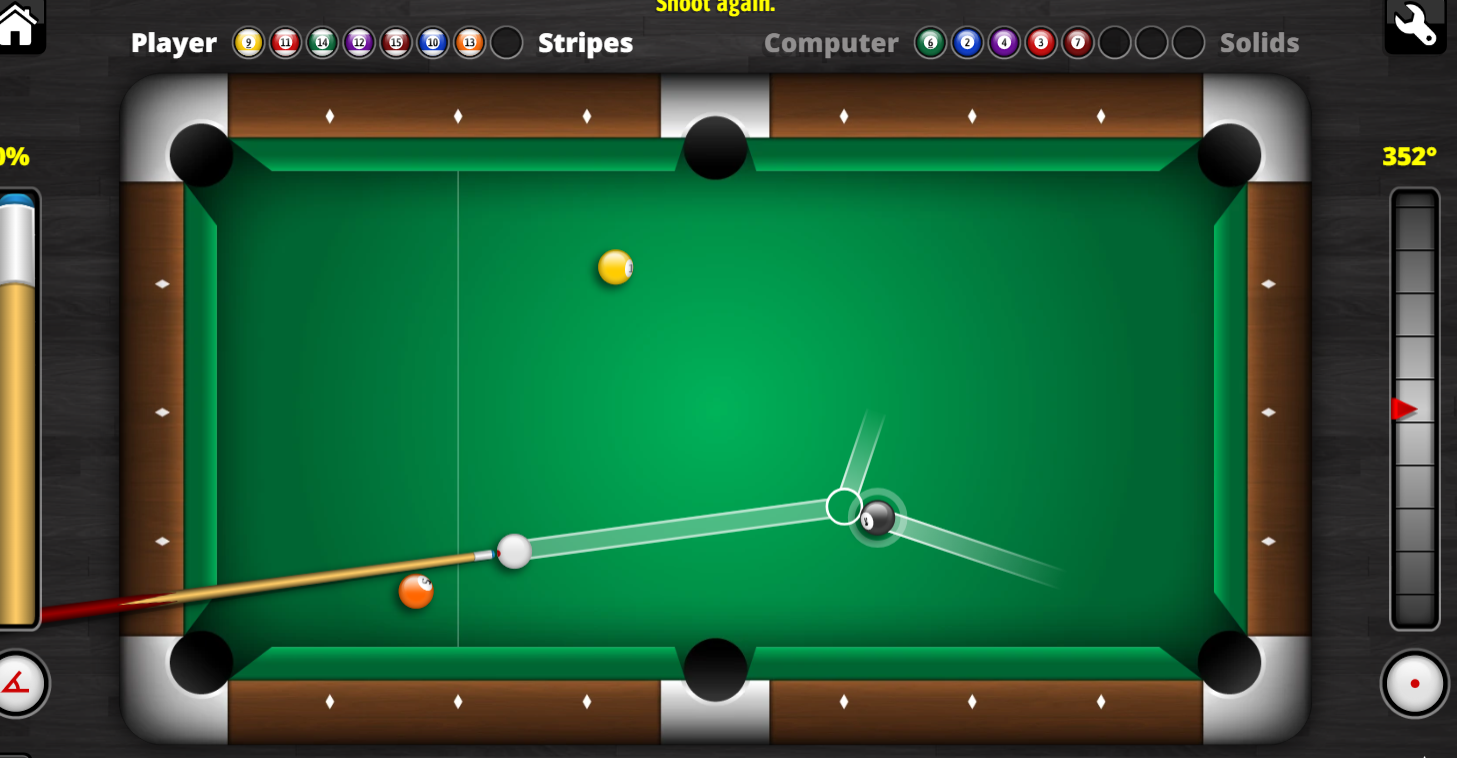
The majority of Scratch rules in 8 ball pool are pretty easy to understand. In essence, the aim of the game is to hit the cue ball into one of your target balls (ideally potting it) without letting the cue ball enter the pocket or leave the table. But what about the 8 ball?
In 8 ball, a game starts with 15 balls (16 including the cue ball) with one player shooting Solids (1-7) while the other shoots Stripes (9-15). However, the 8 ball is shared by both players and is the last ball to be potted after clearing your respective set of seven balls.
On the one hand, as well as being the most important ball on the table, it is one of your balls. On the other hand, though, it is a unique ball with distinct attributes. You already know that you cannot simply pot the 8 ball - in fact, this would instantly surrender the game to your opponent, even if you hit one of your Solids/Stripes first.
But can you hit the ball first as long as you don't pot it? Some players may assume that it is a legal shot because it is one of the balls you need to play at some point in the game. Other players may say it's illegal due to the fact it is also an opponent's ball.
It is possible to find organizations that allow you to hit the 8 ball first. In the majority of cases, though, this move is not permitted and would be considered a foul. As with any other type of Scratch, the consequence is that your opponent gains a 'ball in hand' situation.
Handling a Scratch: Ball in Hand Explained
By now, you understand what a Scratch is. Likewise, you know that the outcome is a 'ball in hand' for your opponent. So, what exactly does that mean?
When a player has the ball in hand, they are essentially allowed to move the cue ball to any part of the table before playing their shot. It provides a significant advantage to the player as they can move it away from difficult positions (either blocked behind an opponent's ball or by the rail) to give themselves an easy pot. Alternatively, more skilled players may use this opportunity as an attempt to pot their most challenging ball, which would subsequently open up the entire table. The key things to remember about a ball in hand are:
- The ball can be moved to anywhere on the table. Contrary to what some people think, there is no need to place it behind the break line.
- Likewise, you can play your ball in hand shot backwards (the pockets behind the break line) if you want. However, some bar rules may stipulate that backwards shots are not permitted.
- While it is a free shot in terms of where you move the ball, you must then adhere to the rules of any other shot. If you subsequently make a Scratch foul yourself, then your opponent will gain a ball in hand.
- Once the cue ball has been placed on the table where you want to strike from, you cannot then change your mind and move it.
- If you complete a successful pot from the ball in hand shot, the subsequent shot is played from where the ball lands. You are not permitted to keep moving the cue ball during this run of shot.
When playing on a physical table, some players prefer to replace the ball in hand with a two shots ruling. This means that, following a Scratch foul, the opponent can have two shots. In this instance, they can afford to take a risk with their first shot or set themselves up for an easier pot with their second. Of course, if they pot one of their target balls on the first shot, they still have two shots.
It should be noted, though, that virtually all versions of digital pool - including themed tables like Valentine's Pool - opt for the ball in hand rules.
Can You Hit the 8 Ball via Another Ball?
Now that you understand that hitting the 8 ball as your first hit is illegal and results in a ball in hand for your opponent, the next question you may want to ask is whether you are allowed to hit the 8 ball via another ball.
In short, the answer is 'yes'. While potting the 8 ball (unless you have already cleared your Solids/Stripes) results in losing the game, it is perfectly legal for you to touch it via another ball. As such, all of the following scenarios are legal shots:
- You are Solids. You strike the cue ball into ball #5, which then cannons into #8. As long as one of the balls hits a rail or is potted (without being illegal in itself), the shot is fine.
- Playing as Solids, the cue ball strikes into ball #4. The #4 hits #14 before falling into the pocket while #14 hits the 8 ball.
- You are Solids and hit the cue ball into ball #1. The cue ball subsequently bounces off a rail and hits the #8 ball, which moves but is not potted.
- Playing as Solids, you strike the cue ball into ball #2. The #2 cannons into a cluster of balls, including the 8 ball as well as both Solids and Stripes.
In many ways, as soon as the cue ball strikes one of your balls, the #8 takes on a similar role to the opposing balls. The only real difference is that potting the 8 ball is a loss whereas potting an opponent's ball either doesn't matter (if you also potted one of your balls) or results in a ball in hand for the other player.
Consequences of Missing the 8 Ball

When playing 8 ball, the 8 ball itself should not be the first hit from the cue ball. However, once you have cleared all of the Solids/Stripes on the table, your attention turns to the 8 ball. If you now pot this ball, you will win the game. While the rules on some physical tables will require a player to nominate the pocket they wish to pot into, this isn't a very common situation online.
With only one target ball to aim for, though, there is a chance you may miss the 8 ball. This is especially true if your previous shot has resulted in poor positioning or your opponent has strategically played the cue ball behind one of their remaining balls.
Therefore, it's important to know the consequences of missing the 8 ball or completing other fouls on this shot. Here's what you need to know:
- If you miss the 8 ball and the cue ball moves around the table without touching any of the opponent's balls, it is a 'no ball hit' foul. The consequence is that your opponent gains a ball in hand.
- If you miss the 8 ball and pot the cue ball, it is a Scratch foul. Your opponent gains a ball in hand situation.
- When you miss the 8 ball and hit one of your opponent's remaining balls, this is the same as if you did it when aiming for one of your initial seven balls. It is a foul and ball in hand for your opponent, even if the cue ball subsequently hits the 8 ball after the initial contact with the wrong ball.
- When you hit the 8 ball but pot the cue ball subsequently rolls into a pocket, this is another Scratch foul and ball in hand situation for your opponent.
- If you pot the white as well as potting the 8 ball, you lose the game, regardless of which ball is potted first.
- When you pot an opponent's ball on the same shot as potting the black, you lose the game too.
- If you hit the 8 ball but neither this ball, the cue ball, or an opponent's ball subsequently contacts a rail, it is a foul and ball in hand result for your opponent.
In other words, you need to contact the 8 ball first and ensure that one of the balls hits a rail to avoid a foul. Or to win the game, you must pot the 8 ball cleanly without Scratching the cue ball or potting an opponent's ball.
Strategies for Avoiding Pool Scratches
Whether it's on the 8 ball or another object, Scratches and other fouls that result in a ball in hand scenario have a hugely detrimental impact on your hopes of winning the game, especially if you come up against high level opponents. Therefore, understanding the best ways to reduce the threat of committing them is essential.
Several steps can be used to avoid scratches when playing online or at a physical table. Focus on the following, and you won't go far wrong:
- Avoid playing unnecessarily powerful shots in which the cue ball could shoot off in any direction. As it fires around the table, it could fall into a pocket or ricochet off of another object ball to cause the same outcome.
- Also be sure not to play too soft, as this could see you fall short of the object ball and fail to either hit a rail or pot from the shot, which will result in a foul and ball in hand for your opponent.
- Know when to play through the center or bottom of the cue ball. This can cause backspin or stun the cue ball after making contact with the object ball. It is a very effective tactic when playing straight.
- Learn scratch lines. Pool is a game of mathematics and angles. When you know how your cue ball will react after hitting the object ball, it is easier to avoid pockets or other fouls. The 30 degree and 90 degree rules are of particular importance.
- If playing online pool, use the on screen lines to understand the direction in which the cue ball will move after contact. And always consider how it will react after contacting a second or third ball.
- Avoid jump shots on real tables unless it's a last resort. When you do this, you could easily bounce the cue ball off of the table, resulting in a ball in hand scenario for your opponent's next shot.
- Be prepared to play for safety when a pot isn't on. Losing your chance of a pot but making your opponent's life more difficult is a fair trade compared to giving them a ball in hand in which they could link several pots.
Above all else, you need to practice. Whether playing 8 ball online or at a real table, any experience will help you master the craft. From understanding angles and scratch lines to working out power or cue ball control, every aspect of your game can be finetuned over time. Be sure to play fairly frequently too. Otherwise, you may inadvertently take backwards steps.
Playing Strategic Scratches
As stated, Scratches are generally something you wish to avoid. However, there may be a handful of situations in which giving up a Scratch through an intentional foul may actually help the cause. Some examples are:
- There is only the 8 ball and one of your initial seven balls on the table (as well as opponent target balls) but the 8 ball is over the pocket with your remaining target ball just in front. Touching the latter may cause the 8 ball to pot.
- The balls are currently in a position where your opponent's next shot will be difficult regardless of where they place the cue ball. They will then either give a free ball back to you, or run the risk of playing a tough shot themselves.
- Playing a shot would probably pot one of their balls and give them a free shot in which they'll probably get another. Or playing a risky shot now would ruin the rest of the table layout that's currently in your favor.
As long as you know the rules, such as not hitting the 8 ball first (unless intentionally for a foul), you can play the game with a more calculated strategy.
Seasonal Pool Games


More Games




Pool News
Disclaimer
DISCLAIMER: The games on this website are using PLAY (fake) money. No payouts will be awarded, there are no "winnings", as all games represented by 247 Games LLC are free to play. Play strictly for fun.