
10 Types of Billiard Shots Every Player Must Know
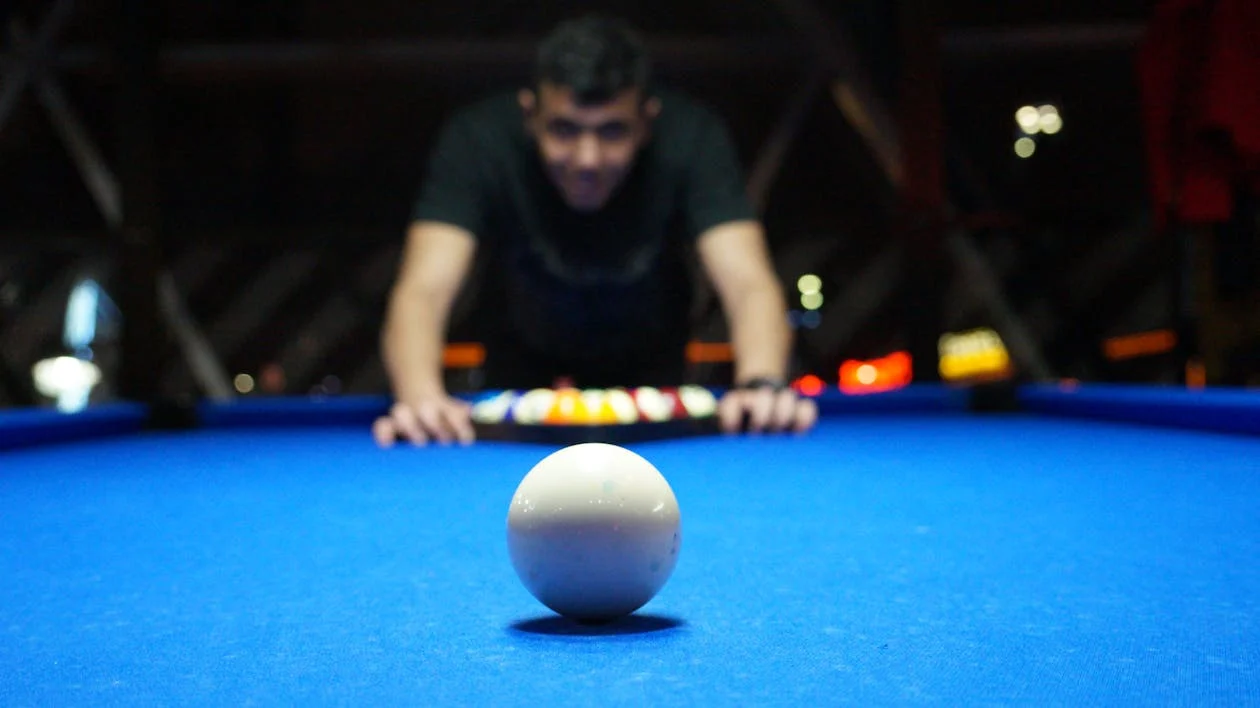
Billiards is a sophisticated game that requires careful attention to detail, including playing the right shots in the right context. Players who understand the underlying mechanics can often defeat amateur opponents and compete with professionals.
But which shots should every player know? That's where this guide can help. It discusses the top moves players should learn as they practice, helping them build more rounded and accomplished games. It also introduces billiard basics and training tips to master the 10 shots discussed.
Here's everything you need to know to supercharge your game:
Fundamentals Of Billiards Shots
Billiards, like pool and British snooker, involves hitting the cue ball with the cue and directing it at "object balls" on a felt-topped table. As such, the mechanics of shots are fairly standard. Players need to consider:
- Power – the amount of energy imparted into the cue ball when struck
- Aim – the point of contact the cue ball makes with the object ball or cushion
- Spin – the zone on the cue ball struck by the cue to determine its spin
Beginners can sometimes hit the ball too hard, causing chaos on the table, which increases the risk of unwanted pocketing and poor positioning. Furthermore, aiming can take time to master because it requires getting the cue stroke right, building muscle memory, and knowing tangent lines intuitively (the direction the object ball will take when struck).
Spin is the most complicated skill and involves striking the cue ball off-center. Draw or "backspin" comes from striking the cue ball in the bottom half, causing the ball to spin backward or stop its motions when it contacts the object ball. Follow-through, or topspin, is where you hit the cue ball in the top section to make it roll forward more, giving it more momentum. This shot causes it to roll faster and further after making contact with the object ball, perhaps for better positioning on the next shot.
English is "side spin," or hitting the cue ball on the left or right of the center line. Experienced players can combine it with draw and follow-through to carefully control where the ball finishes on the table after the shot.
Learning these variations is essential for building a rounded game. Understanding the various ways to control the cue ball and make shots allows players to wriggle out of sticky situations and progress on tables that would otherwise be impossible to play.
Top 10 Billiard Shots Explained
So, what are the top 10 billiard shots you need to know? Let's take a look.
1. The Straight Shot
The "straight shot" is the starting place for beginner billiard players. Aim to master this shot before moving on to others.
In its most fundamental incarnation, the straight shot involves striking the cue ball in the center towards the object ball and watching the tangent lines emerge. This practice is essential for novices because it builds intuition of how the balls behave.
How To Perform The Straight Shot
To perform the straight shot, line your cue up with the cue ball and the path you want it to travel. Ensure it is a straight line to the point of contact on the object ball to give you the highest chance of pocketing or making a successful safety play.
When striking the cue ball hit it dead center. Don't hit the top, bottom, or sides, as this can introduce unnecessary spin to the motion. Keep things simple as you learn the fundamentals.
When To Use The Straight Shot
Most players use the straight shot when they have a clear line of sight to the object ball and there is no risk of unwanted pocketing. If a tangent line suggests the cue ball will end up in a nice position for the next shot, this shot is often the safest approach.
Common Mistakes
Beginners learning the straight shot often make the mistake of miscuing the cue ball. They hit it too hard or strike it in the wrong position, leading to excess spin. To avoid this fate, focus on hitting the cue ball dead on.
2. The Break Shot
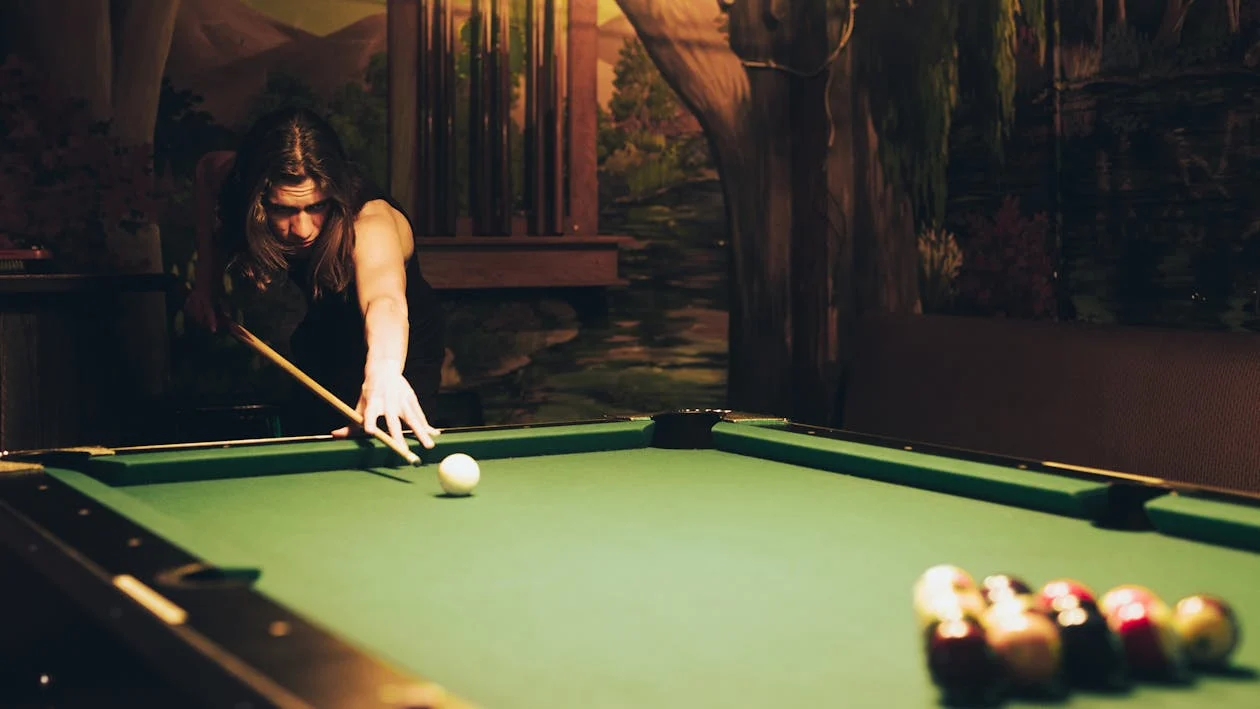
The break shot is the first shot in a game of billiards, designed to break up the balls. It's essential for removing object balls from the pack to allow potting.
The break shot is difficult because it requires a gentle touch while also ensuring the ball returns to the head of the billiard table. As such, it is something that professional players practice for years to perfect.
How To Perform The Break Shot
For the break shot, you need to hit the cue ball with some power to return it to the head of the table (if playing for safety). Alternatively, you can aim for the front ball in the pack, slightly off-center, to increase the likelihood of a chance pot.
Most players begin with the cue ball slightly off-center behind the line for better control. This positioning improves the angle and makes it more likely that the cue ball will return up the table after being struck.
When To Use The Break Shot
As the name implies, the break shot is the shot you should play at the start of the game (if it's your turn to go first). Use it in billiards, 8-ball pool, and 9-ball pool.
Common Mistake
Players focusing on power can lose control of their cues (and the cue ball), leading to poor pack positioning or a "scratch" (pocketed cue ball). Therefore, the break shot requires a lot of drilling to perfect and maintain.
3. The Safety Shot
Coming in at number three on this list is the safety shot. It's critical when playing defensively or getting out of trouble quickly.
The safety shot's purpose is to position the cue ball somewhere hard for your opponent to make their next shot. Because of this, it can take several forms.
How To Perform The Safety Shot
Most safety shots require knowing your tangent lines and how the ball will bounce off the cushions before resting in its final position. Understanding these (by playing more straight shots) can be helpful.
However, you may need to play other shots (discussed below) to complete the safety maneuver. These include adding spin or even trying to jump the cue ball.
The most common goals of safety shots are to:
- Move the cue ball far from the object balls to make potting more challenging for your opponent
- Placing the cue ball behind an object ball that is getting in the way of a shot your opponent wants to make
- Placing the cue ball close to an object ball, nudging it to make a shot impossible
When To Use The Safety Shot
You should use safety shots when there are no available plays (or shots are too risky and could leave you in a poor position). Safety shots are common in snooker, but less popular in pool and billiards where playing surfaces are smaller.
Common Mistake
Poor positioning is the most common safety shot mistake. Players practice these less, so can't always judge where the ball will land.
4. The Combination Shot
The combination shot is one of the most impressive and challenging in billiards. It involves striking the cue ball, hitting the first object ball, and then using that to strike a second ball and knock it into a pocket.
The challenge with this shot is the growing error that can occur after each strike. Getting the contact point right on the second ball is very challenging, and only usually results in a pot if object balls are close together, or the second object ball is near the pocket.
How To Perform The Combination Shot
Playing the combination shot well requires hitting the first object ball at the perfect angle. Instead of aiming the resulting tangent line into a pocket, you need to line it up with the part of the second object ball that will pocket it.
Your primary focus should be to strike the first object ball in the correct zone. If the second object ball is close to a pocket, your aim needn't be perfect. But for any other shot, it should be.
When To Use The Combination Shot
Combination shots are best for situations where the second object ball is tantalizingly easy to pocket but another object ball is blocking the cue ball. It's useful when you can't make a direct shot.
Common Mistake
The most common mistake for this shot is misjudging the resulting tangent lines. Players often don't have as much intuition for this shot as a straight shot.
Players can also hit the cue ball too softly, misjudging the power required to hit the second object ball into its pocket.
5. The Jump Shot
The jump shot is one of the most exciting in billiards and involves making the cue ball jump over an obstructing ball to hit another object ball beyond. Experts usually master this shot to enhance their game and to give them more options in sticky situations.
How To Perform The Jump Shot
Performing the jump shot is challenging. Players sometimes begin with a "jump cue" although you can use a standard one.
Paradoxically, jumping the cue ball requires cueing down on it from a steep angle. This strike will create a backspin while pushing it into the table, causing it to bounce over the ball beyond.
The hardest part is to maintain control over the cue ball. The goal isn't simply to jump it, but also to complete a viable shot, such as pocketing balls and safety play.
Following through with the cue isn't possible for the jump shot, so players need to get used to the feel of making a somewhat jerky movement. This action can be hard to master if you already have a lot of muscle memory.
When To Use The Jump Shot
As with the combination shot, the jump shot is ideal when another ball is blocking the path going to the target ball. Instead of hitting the object ball getting in the way, you attempt to jump over it.
Usually, the jump shot only works at short distances. Cueing the ball high into the air more than, say, 10 inches, isn't viable.
Common Mistake
The most common jump shot mistake is hitting the cue ball illegally. Billiards players are not allowed to try to loft the ball from below or make contact with it more than once.
6. The Masse Shot
The masse shot performs a similar function. However, instead of attempting to loft the cue ball or use another object ball to achieve a pocket, this technique involves spin.
How To Perform The Masse Shot
To execute the masse shot, take the cue and aim it downwards onto the cue ball, striking it hard on one of its sides to generate lateral spin. This extreme action can cause the path of the ball to arc (instead of the usual straight line) allowing it to curve around object balls at medium and long distances.
When To Use The Masse Shot
You should use the masse shot when your only option is to curve the cue ball around another object at a medium-to-long distance. (It's a good replacement when shorter jumps aren't available or feasible).
The masse shot is also useful for generating difficult scenarios for opponents. Using them in safety shots can induce a foul.
Common Mistake
Players can find it challenging to learn the technique for this highly advanced shot, causing the cue ball to roll out of control, making an already poor positioning even worse.
7. The Follow Shot
The follow shot applies topspin to the cue ball to make it roll further after it hits the object ball. You can combine it with English to improve your post-shot positioning.
How To Perform The Follow Shot
To execute the follow shot, aim to hit the cue ball in the top half. Striking it relatively hard will impart spin, allowing it to continue moving after you hit the object ball in your chosen direction of travel.
When To Use The Follow Shot
Use the follow shot when you want to move the cue ball into a better position for the next shot. Players often use this shot when they are on a break.
Common Mistake
Striking the cue ball too high is the most common follow-shot-related mistake. Players think topspin is only achievable by making contact with the ball high up when just above the center line produces equal results while improving aim and power delivery.
8. The Draw Shot
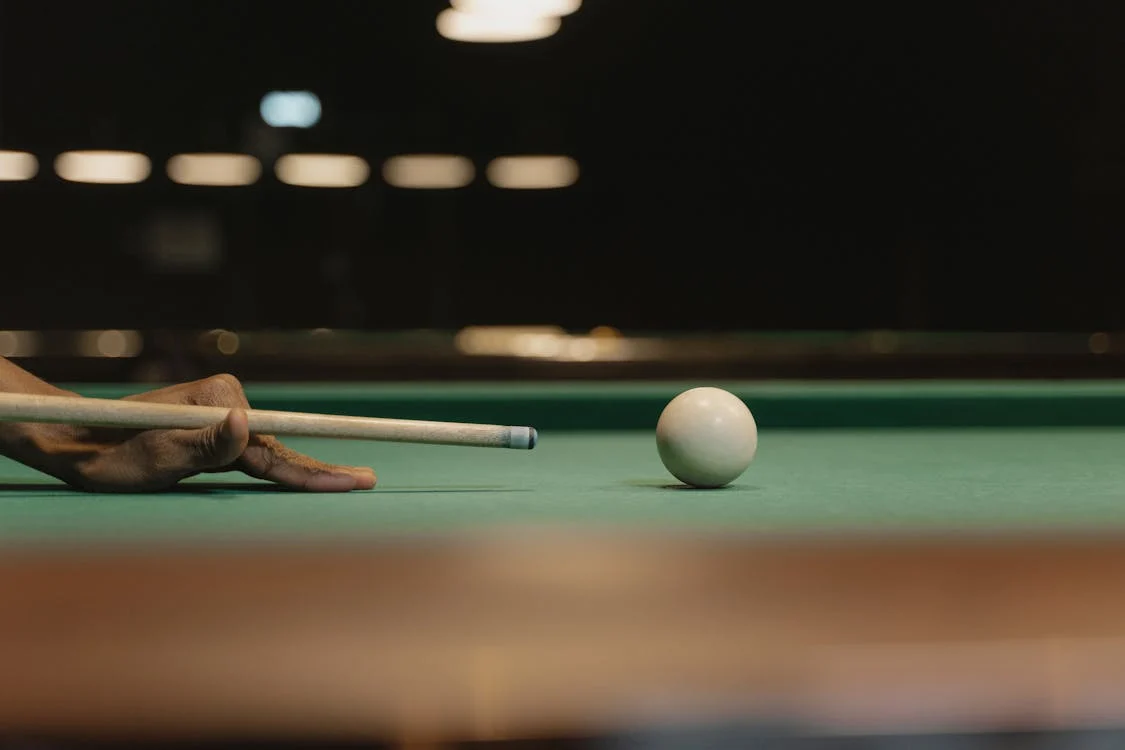
The draw shot is the basic backspin shot in billiards. It applies backspin to the ball, causing it to stop dead or even move backward towards you after it contacts the object ball.
How To Perform The Draw Shot
Strike the cue ball below the center with a smooth and long follow-through. This action causes the ball's mass to move forward, but spin towards you, creating momentum that will control its movement after it strikes the object ball.
When To Use The Draw Shot
The draw shot is a positioning move, allowing you to control where the ball goes after follow-through.
Common Mistake
Players sometimes hit the cue ball too low, believing it will improve backspin application. However, just below the center line is usually enough and reduces the risk of the ball jumping off the table.
9. The Bank Shot
The bank shot is another common shot where you use the cue ball to bounce an object ball off a rail before pocketing it. Again, this shot requires an understanding of angles and tangent lines.
How To Perform The Bank Shot
Perform the bank shot by calculating the angle of incidence and reflection off the cushion. Understanding this will tell you where the ball will find its final resting position.
When To Use The Bank Shot
Bank shots are helpful when the cue ball is close to the cushion, or when another ball is blocking the path to the target pocket.
Common Mistakes
Players sometimes apply spin during bank shots, but this can make calculating the various angles more challenging. Like combination shots, bank shots require higher accuracy than conventional straight shots, which spin might hamper.
10. The Cut Shot
Finally, the cut shot tries to strike the object ball with the cue ball at a slight angle, making it move sideways into a pocket. Again, this shot requires finesse and getting the contact with the ball just right.
How To Perform The Cut Shot
Performing the cut shot involves aiming at the object ball and trying to clip it off center. Align the cue with the side of the object ball and follow through with more power, the closer the angle is to 90°.
When To Use The Cut Shot
Use the cut shot when a ball is close to a pocket and you are approaching it from a 90° angle. Cutting it finely into the pocket is an easy point-scoring opportunity.
Common Mistakes
Most players find this shot difficult, over- or under-estimating the cut angle (because it is unusual compared to most straight shots). As such, regular drills can help players perfect this shot.
Training Tips To Master These Shots
Mastering these shots is something that can take players a lifetime. However, you can speed up your learning by following tried-and-tested techniques that some of the best billiards players in the world use to master the game.
Set Up Drills
Start by learning how to set up drills on the table so you can practice set-piece shots multiple times in quick succession. Line up balls next to the pocket and try to pot all of them at slightly different angles. If necessary, replace balls in the exact position, or get a friend to do it for you, so you can continue trying different approaches and techniques.
You can also practice your technique with online billiards and pool games. These teach you more about motion and positioning, helping to build your intuition.
Use A Coach
Also, it helps if you have a coach who understands the game. Their main role should be to correct you if you make mistakes or get your technique wrong.
Having them around from the start is an excellent idea. That's because they can stop you from developing bad habits and accelerate your progress over the first few weeks.
Make sure your coach gives you feedback. You need to understand your errors and how to correct them.
Commit To A Practice Routine
Another tip is to commit to a regular practice routine. Consistency is often the key to learning many of these shots because it boosts muscle memory. An hour a day is usually enough, though you may want to go longer if you are serious about improving your skills.
Try To Combine Multiple Shots
You can also try combining multiple shots into a single play (something you will need in competitive matches). Adding English, draw, and bunker play can help you pull the rabbit out of the hat and get out of tricky situations. Once you learn the basics, experiment with different approaches to see what works.
Use Video Analysis
Finally, it's a good idea to leverage video analysis. Recording yourself taking shots can help you highlight issues and get feedback from online coaches.
Try to video your play from multiple angles so you don't miss anything. Check your cue control, action on the cue ball, and how you interact with the table. All these factors can determine your performance.
Wrapping Up
As this guide makes clear, billiards is a game that can include complex shots. Spin-related cue action is only the start. Advanced players must leverage the bunkers, play jump shots, and ricochet multiple object balls for better potting and positioning.
Safety play is also becoming critical in the modern game. Players aren't just trying to pot balls, but also prevent their opponents from doing so when table positions permit it.
Don't worry if you don't master billiards immediately. Like anything that requires skill, it takes time. Creating a practice routine can help, but always work with a coach to ensure you don't make mistakes that could undermine your ability to compete long-term.
Seasonal Pool Games


More Games



Pool News
Disclaimer
DISCLAIMER: The games on this website are using PLAY (fake) money. No payouts will be awarded, there are no "winnings", as all games represented by 247 Games LLC are free to play. Play strictly for fun.